


Intelligent Telematic Systems
We are a group dedicated to the development and implementation of telematics systems. Our work ranges from the design of communication infrastructures (terrestrial, satellite, and wireless) and on-board computing systems to network optimization and the development of communications hardware (such as antennas and modules), as well as the simulation of data transmission technologies and the design of simulators and parameter calculation tools for transmission systems.
Division's history
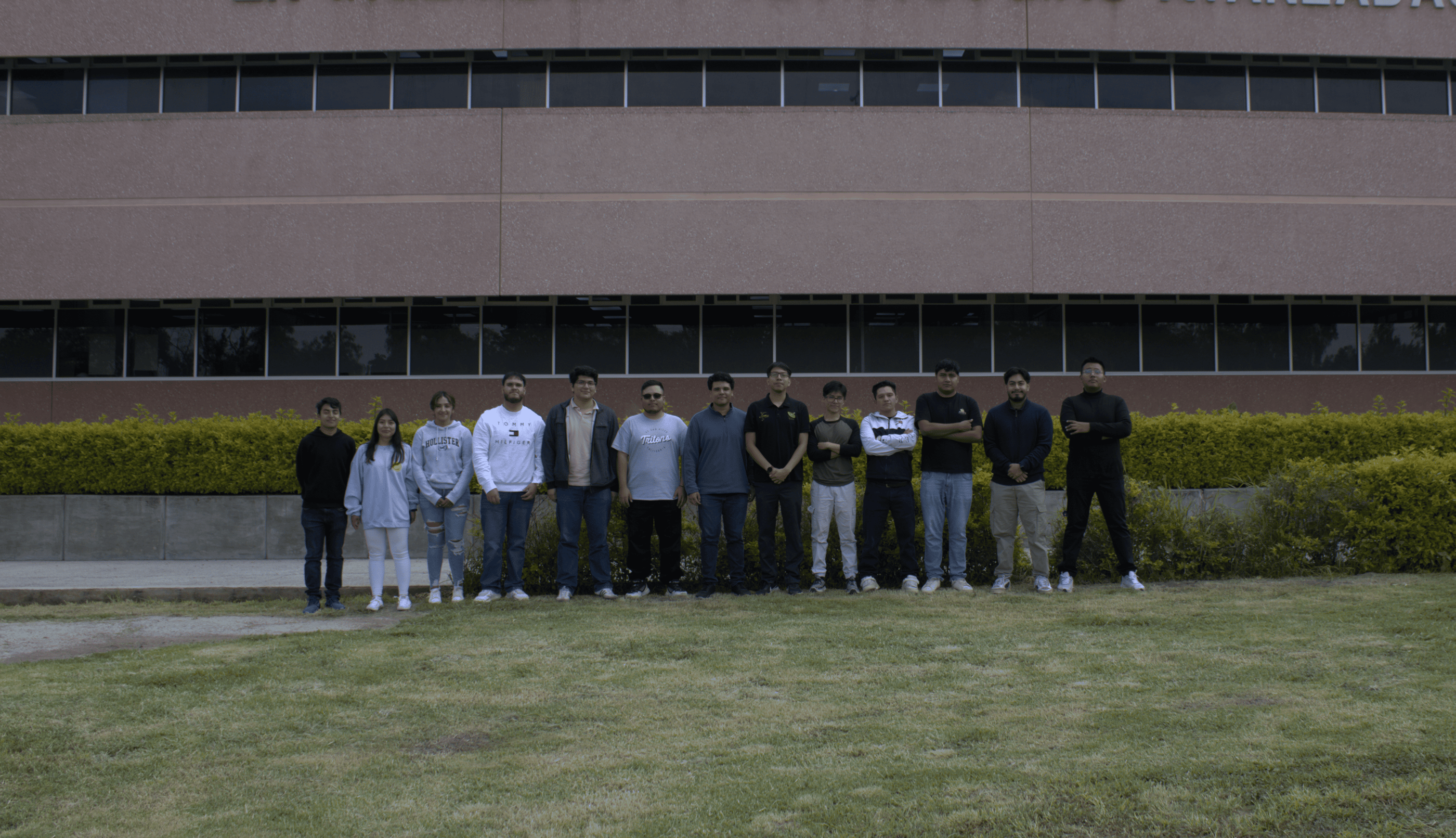
In early 2024, UPIITA launched the Transdisciplinary Laboratory project. Since then, in collaboration with Dr. Hernández, M.Sc. Yáñez Casas spearheaded the initiative to integrate intelligent, comprehensive telematic systems into the development of space technology in Mexico.
The laboratory quickly became a hub for redefining the concept of telematics; it not only revisited its foundational structure but also enriched its vision by pushing the boundaries of technological development—integrating cutting-edge technologies such as quantum communications and AI-driven telecommunication systems, among others. This effort gave rise to the Intelligent Telematic Systems Division, a group focused on integrating and evolving traditional communication systems toward a high-tech, transdisciplinary approach to telematics.
Based at UPIITA (part of the National Polytechnic Institute, or IPN), the team solidified its identity and mission on August 1, 2025—at the start of the B25 semester—marking the formal commencement of its activities with the inclusion of a large group of students from the Telematics Engineering, Computer Systems Engineering, and Communications and Electronics Engineering programs. In May 2026, M.A. Ceja de Luna joined the team as the Division's co-leader.
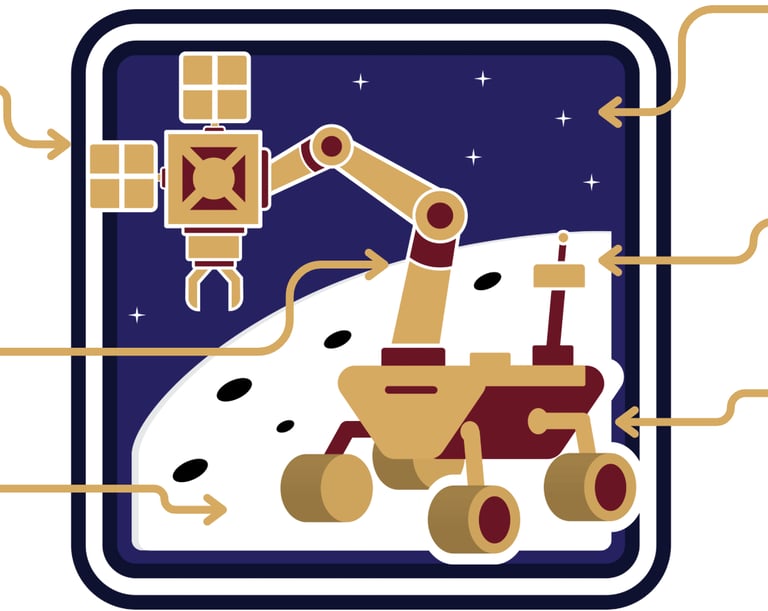
Nuestra identidad
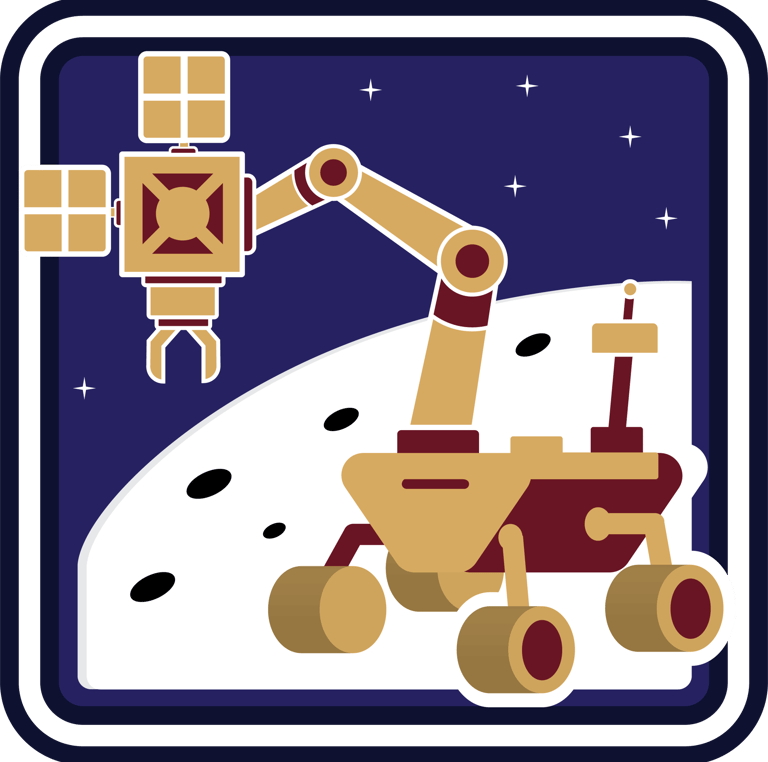
La transición fluida entre el brazo robótico, el satélite y el actuador tipo gripper simboliza la versatilidad y fortaleza del equipo para el desarrollo de sistemas espaciales en múltiples áreas, con un enfoque claro en el control y exploración espacial.
El robot de cinco grados de libertad representa la esencia tangible de la robótica, acercando su complejidad tecnológica a la comunidad y mostrando de forma clara el puente entre la investigación y su aplicación real.
La superficie lunar, aunque fuera del alcance físico, simboliza la innovación en robótica aplicada al estudio de las ciencias terrestres, reflejando nuestra capacidad para explorar y comprender entornos complejos.
Las estrellas reflejan los sueños de cada integrante, brillando como faros que nos guían y nos inspiran a convertir cada proyecto en una realidad tangible.
El transceptor del robot móvil simboliza la tecnología de telecomunicaciones, hilo vital que conecta y guía a cualquier sistema móvil, siendo esencial para el éxito de cada misión espacial.
El mecanismo del Rover, conformado por su sistema de movimiento, llantas y eslabones de soporte, representa los cimientos flexibles que sustentan todo nuestro desarrollo, simbolizando nuestra capacidad de adaptarnos a los cambios. Aunque no siempre sean visibles, estos cimientos sostienen cada proyecto y que nos permiten avanzar sin límites.
Intelligent Telematics Systems Team Leaders
👨💻 Introduction:
Gabriela Aurora Yáñez Casas (M.Sc.) earned her degree in Telematics Engineering from the National Polytechnic Institute (IPN) in 2013 and her Master of Science degree in Telecommunications Engineering from the same institution in 2021, with a thesis focused on numerical tools for electromagnetic propagation modeling. She is currently a professor-researcher at the IPN's Interdisciplinary Professional Unit for Engineering and Advanced Technologies (UPIITA), where she teaches courses such as Distributed Systems, Distributed Databases, Web Engineering, Telecommunication Networks, Smart Networks, Data Transmission, Cellular Systems, Research Methodology, and Capstone Projects I and II. She has presented her research findings at over 40 national and international conferences and has co-authored more than 15 indexed, peer-reviewed publications. She has led three research projects and participated in over 20 additional ones. She has supervised numerous theses, including work on satellite onboard computing, LoRaWAN communications, optical links, and embedded systems. Her areas of expertise range from electronic system design, signal processing, and communications to artificial intelligence, data science, and dynamic system modeling.
🤖 Experience:
LPWAN and IoT networks.
RF and FSO satellite communications.
Specialized packaging/framing design for satellite payloads.
Cellular communications.
Specialized software development for communications.
Studies and analysis using random variables.
Discrete-event simulation.
🧪 Founding of the Division
She spearheaded the team's formation following the creation of the Transdisciplinary Laboratory in 2024. Subsequently, in August 2025—driven by the integration of over 10 students working on capstone projects and in collaboration with Dr. Jorge Hernández—the Intelligent Telematic Systems Division was formally established.
M. Sc. Gabriela Aurora Yáñez Casas
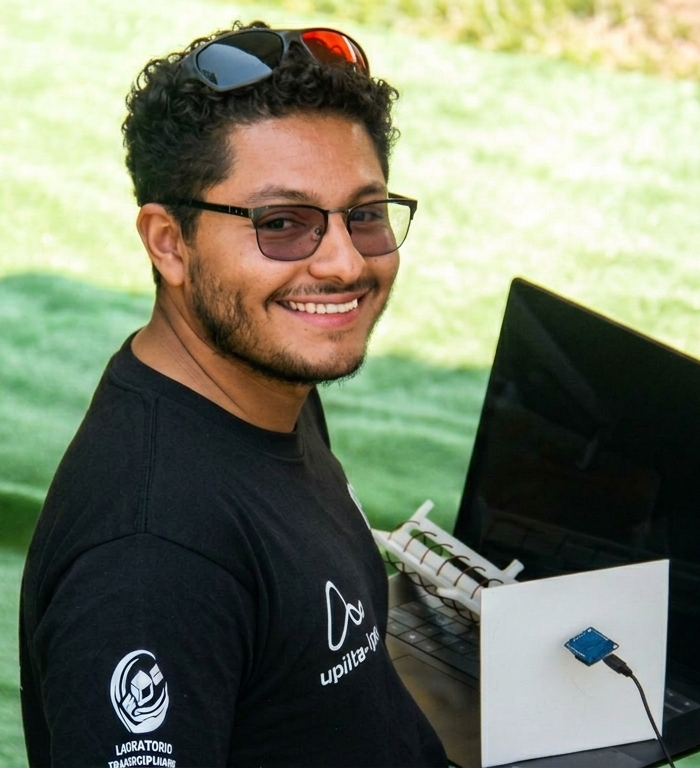
Manuel Andrés Ceja de Luna

👨💻 Introduction:
Manuel Andres Ceja de Luna is a Telematics Engineering student at the National Polytechnic Institute (IPN). He is currently developing his thesis on the design of an onboard satellite computer prototype based on low-cost electronic architectures for 1U CubeSats. Passionate about electronics and communications, he is also an incoming graduate student in Computer Science.
🤖 Experience:
SMD electronics.
Onboard satellite computing.
High-gain antenna development.
Transceiver conditioning.
Specialized packaging/housing design for satellite payloads.
Ground station design and implementation.
Developer of the telemetry/telecommunications system for a CanSat entry in the World CanSat Contest 2026.
He leads the Intelligent Telematic Systems Division and works on the TETRA radio communication system for the Mexico City Metro (STC).
🛠️ Projects and Services We Offer
📡 Telecommunications Earth Stations
Development of satellite communication earth stations.
Fixed and mobile earth stations for the conversion and logical convergence of various telecommunications technologies.
Development of antennas for communications across different frequency bands.
Earth stations utilizing COTS components.


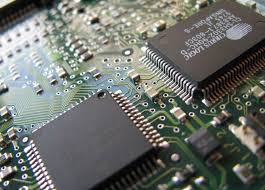
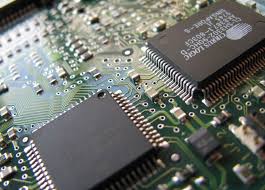
💻 Satellite onboard computing
Development of satellite on-board computing prototypes.
Technological miniaturization using SMD components.
Data distribution techniques for satellite on-board computing.
Homogeneous and heterogeneous on-board computing architectures.
AI in space computing.
Active members
Jorge Javier Hernández Gómez
Physicist, Laboratorio Transdisciplinario
Sebastián Rivera Santa Cruz
M. Sc. in Computation, CIC, IPN
Alberto Ruán Aldana
Telematics Engineering, UPIITA, IPN
Paloma Alonso Gutiérrez
M. Sc. in Telecomunications Engineering, UPIITA, IPN
Kevin Antonio Ahumada González
Telematics Engineering, UPIITA, IPN
Jesua Chávez García
Telematics Engineering, UPIITA, IPN
David Eduardo Rodríguez Miranda
Telematics Engineering, UPIITA, IPN
Mauricio Raziel Soriano Laguna
Telematics Engineering, UPIITA, IPN
Omar Noé Trujillo Martínez
Telematics Engineering, UPIITA, IPN
Angel Gutiérrez Aguilar
Telematics Engineering, UPIITA, IPN
Omar Stankewech Marta Olvera
Telematics Engineering, UPIITA, IPN
Edward Guerardo Cruz Luna
Telematics Engineering, UPIITA, IPN
Daniela Hernández Nazli
Telematics Engineering, UPIITA, IPN
Mariana Salazar Almanza
Telematics Engineering, UPIITA, IPN
Marco Antonio Martínez Anaya
Telematics Engineering, UPIITA, IPN
Luis Fernando Guzmán Barriga
Telematics Engineering, UPIITA, IPN
Juan Manuel Bautista Uribe
Telematics Engineering, UPIITA, IPN
Lesly Esperanza Ramírez García
Communications and Electronics Engineering, ESIME Zacatenco, IPN
Lizzete Santos Ruíz
Communications and Electronics Engineering, ESIME Zacatenco, IPN
Rebeca Domínguez Arana
Computer Systems Engineering, ESCOM, IPN
Arturo Cruz Aparicio
Telematics Engineering, UPIITA, IPN
Alfredo Sánchez Martínez
Computer Systems Engineering, ESCOM, IPN
Keb Sebastián Fernández Guerrero
Telematics Engineering, UPIITA, IPN
Joel Moreno Gaspar
Telematics Engineering, UPIITA, IPN
Jesús Javier Pérez Guerrero
Telematics Engineering, UPIITA, IPN
Jose Angel Perez Romero
Telematics Engineering, UPIITA, IPN
Luis Fernando Fragoso
Telematics Engineering, UPIITA, IPN
M
Telematics Engineering, UPIITA, IPN